




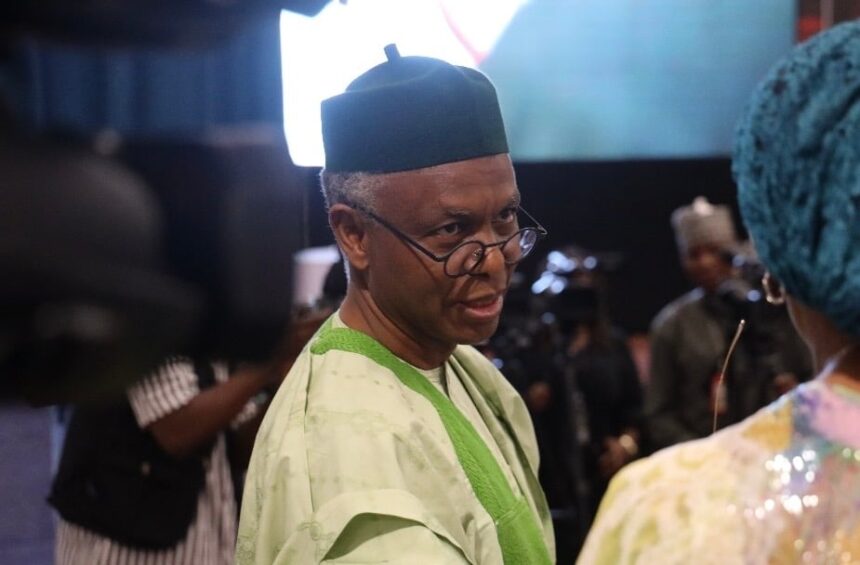
The Independent Corrupt Practices and Other Related Offences Commission has released former Kaduna State Governor Nasir El-Rufai from custody following the death of his mother on Friday. An ICPC source confirmed that the former governor was granted compassionate bail to allow him mourn and participate in his mother’s burial rites, describing the situation as sensitive and declining to provide further details.
The commission had held El-Rufai for over a month over corruption allegations, maintaining that his detention was backed by a valid court order before his temporary release. His son, Bashir El-Rufai, earlier announced the development on social media, alleging that his father’s detention was unlawful and criticising the agency involved.
El-Rufai’s release followed news of the passing of his mother, Umma El-Rufai, which emerged on Friday. In response, Nigeria’s National Security Adviser, Nuhu Ribadu, expressed condolences to the family, describing the late matriarch as caring and offering prayers for her repose. The former governor, who served between 2015 and 2023, has been under investigation over alleged corruption linked to his time in office. He was initially detained by the Economic and Financial Crimes Commission before being transferred to the ICPC.
He was later arraigned before the Federal High Court in Kaduna, which ordered that he remain in custody pending the hearing of his bail application scheduled for March 31. Additional cases are also pending against him in courts in Kaduna and Abuja.
El-Rufai has denied all allegations, describing the investigations as politically motivated. He also faces scrutiny over claims he made on television alleging that he intercepted a phone call involving Ribadu directing his arrest. Once a political ally of Bola Tinubu, El-Rufai’s relationship with the president reportedly deteriorated after his ministerial nomination was blocked by the Senate over security concerns.
He has also filed a fundamental rights enforcement suit challenging his detention and the search of his Abuja residence, arguing that the warrant used was invalid. The ICPC, however, maintains that it acted within its legal powers following a petition against him, although proceedings in the case have faced delays.
Source: https://www.premiumtimesng.com/