



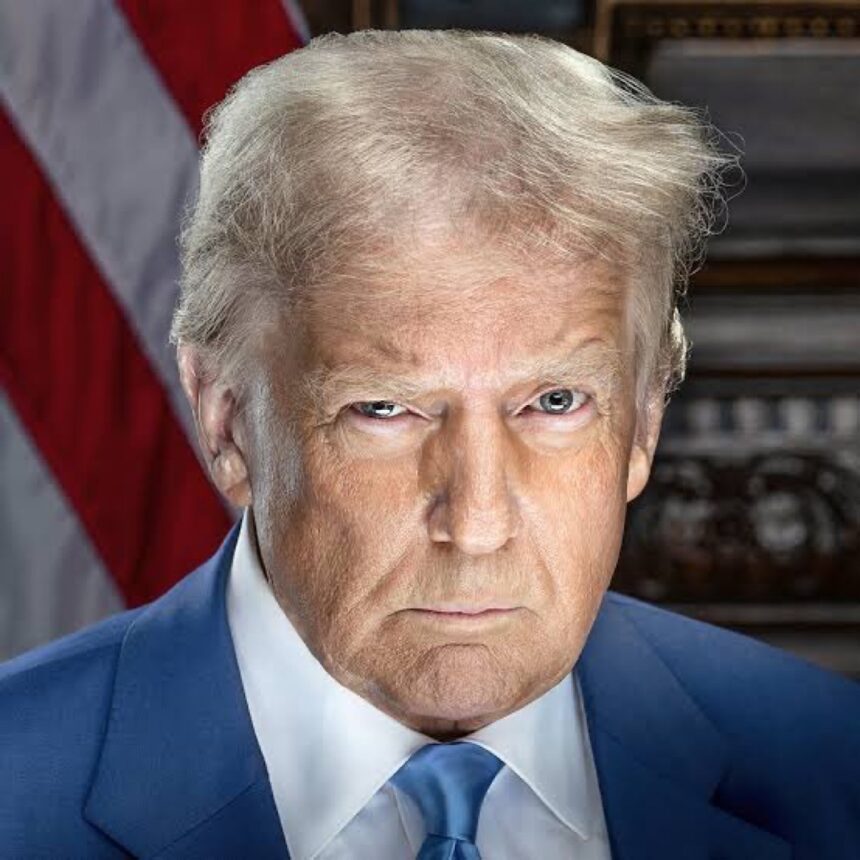
The United States has confirmed that it carried out a military strike against Islamic State fighters in northwest Nigeria, stating that the operation was conducted at the request of the Nigerian government and in coordination with local authorities.In a statement issued on Thursday, December 25, the US Africa Command said the strike occurred in Sokoto State and led to the deaths of several militants linked to the Islamic State group.
According to the command, the operation formed part of ongoing security cooperation with Nigeria aimed at countering militant threats in the region.US President Donald Trump, who made the operation public on his social media platform, described it as a firm response to militant violence. He claimed the group had been targeting and killing civilians, particularly Christians, and presented the strike as a necessary step to curb escalating attacks.
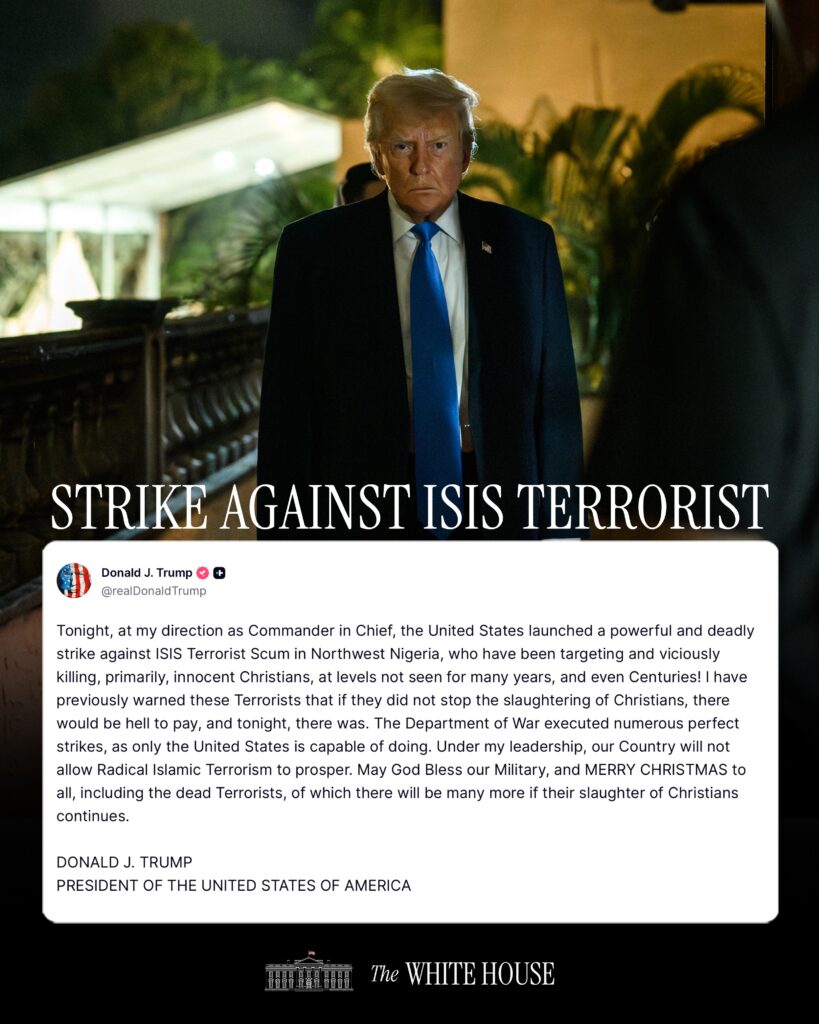
The action follows weeks of heightened rhetoric from Trump, who in late October warned that Christianity faced what he described as an existential threat in Nigeria. He had earlier suggested that Washington could consider military action if Nigerian authorities failed to curb violence against Christian communities. Nigerian officials have repeatedly rejected that framing, maintaining that armed groups in the country attack both Muslims and Christians and that the violence is driven by a complex mix of insurgency, banditry and criminal activity.
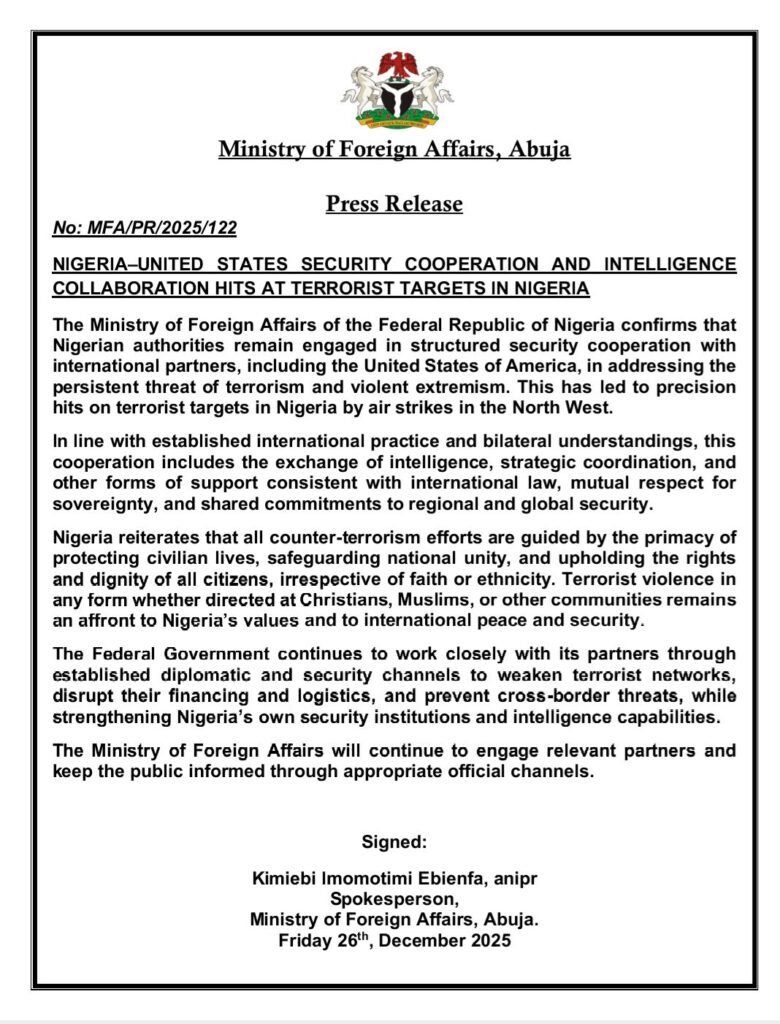
Nigeria’s Ministry of Foreign Affairs confirmed the strike, describing it as part of broader security cooperation with the United States. The ministry said intelligence sharing and strategic coordination between both countries had resulted in precision air strikes on terrorist targets in the North West. The Pentagon also released video footage showing a projectile launched from a US warship, while a US defence official said the operation targeted known Islamic State camps and killed multiple fighters.
US Defence Secretary Pete Hegseth thanked the Nigerian government for its cooperation and added that there was “more to come,” a remark that has prompted speculation about further joint operations. Business Insider reported that the United States had been carrying out intelligence-gathering flights over large parts of Nigeria since late November, suggesting an expanded level of engagement in the country’s security situation.
The strike has, however, triggered strong reactions within Nigeria, particularly over concerns about sovereignty and the implications of foreign military involvement. Prominent Islamic cleric Sheikh Ahmad Gumi called on the federal government to suspend all military cooperation with the United States, warning that American involvement could aggravate Nigeria’s security problems.
In a statement shared on his Facebook page, Gumi argued that allowing foreign powers to participate in Nigeria’s counterterrorism efforts was a mistake. He warned that such interventions often come with civilian casualties and hidden political motives, adding that no country should permit its territory to become a battleground.
He suggested that if Nigeria sought external military assistance, countries such as China, Turkey or Pakistan would be more suitable partners.Public reaction on social media has been sharply divided. Some US commentators praised the strike as evidence that Trump had fulfilled a promise to defend Christians, while others used strong language to call for tougher action against extremists.A global political commentator also linked the operation to recent appeals by Nigerian Christians, suggesting the strike appeared to be a direct response to calls for international help.
Within Nigeria, reactions reflected deep religious and political sensitivities. Some users commended the secrecy and execution of the operation, contrasting it with what they described as inefficiencies in domestic military campaigns. Others were more critical. Rights advocate Dr Shola Mos-Shogbamimu cautioned against portraying the strike as a humanitarian intervention and warned Nigerians against accepting narratives that it was carried out solely to protect Christians.
At the same time, some voices from northern Nigeria defended the action. A Muslim commentator argued that strikes on Islamic State camps should not be interpreted as an attack on Islam, noting that extremist groups have killed many Muslims across the region. He suggested that opposition to the strike reflected misplaced sympathy for militants rather than concern for their victims.
The Nigerian government continues to maintain that armed groups in the country target people of all faiths and that international narratives focused only on religious persecution oversimplify the crisis. Nonetheless, the confirmed US strike highlights how Nigeria’s battle against militant violence is increasingly attracting global involvement, even as domestic opinion remains deeply divided over whether such intervention enhances security or risks further instability.
Source: https://africa.businessinsider.com/