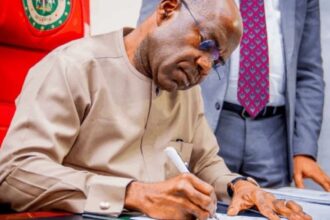




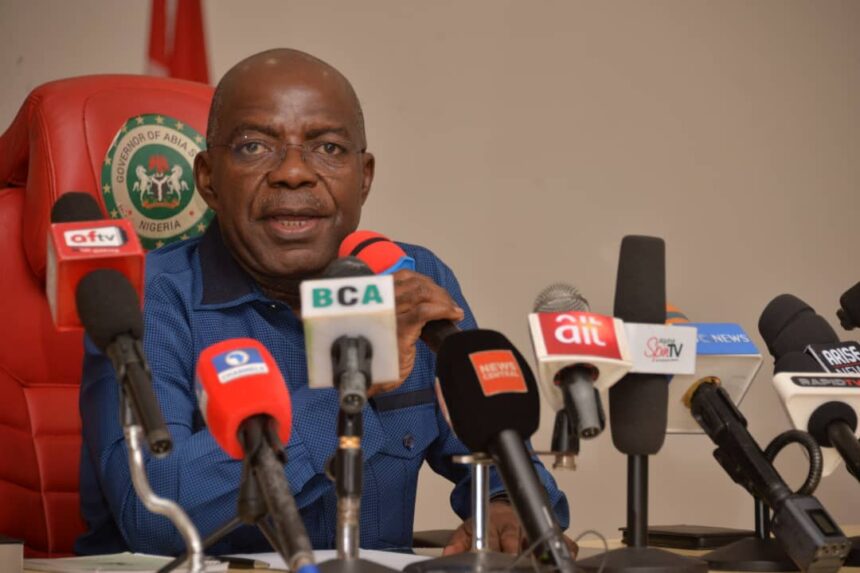
Abia State Governor, Alex Otti, has announced that the state government will commit N5 billion to manpower training and development within the state civil service in 2026. The governor made this known during his New Year broadcast on Thursday, stating that the sustainability of public sector reforms depends largely on the capacity of institutions to properly understand and execute their mandates. He explained that his administration has introduced a new work ethic across ministries, departments and agencies through multiple incentive structures.
Otti said that beyond improving workers’ welfare, the government has invested significantly in programmes aimed at enhancing employees’ skills and exposing them to modern tools and systems that boost productivity. He disclosed plans to establish a dedicated centre for the training and retraining of public sector workers to strengthen their competencies and service delivery.
According to him, the administration will also reform deployment practices in public institutions in the New Year, ensuring that personnel are posted only to roles where they can function effectively, add value and improve overall performance. He said the policy of placing the right people in the right positions would further enhance the government’s capacity to deliver results tied to rapid socioeconomic development in the state.
The governor also said his administration would build on achievements recorded over the past 31 months by expanding road infrastructure development, with the aim of reducing intra- and inter-city transport fares, lowering production costs, creating more jobs and increasing economic activity across urban and rural areas.
He noted that the recently introduced mass transit scheme, which uses energy-efficient buses, is expected to cut commuting costs per kilometre, particularly as more buses are added to the fleet. Otti added that the government plans to deploy 100 electric buses across major urban and semi-urban routes in the state by the end of the New Year.
He further said that 2026 would witness increased commitment to critical transport infrastructure, including the completion of multimodal transport terminals and several strategic road projects. According to him, these initiatives are designed to support the smooth movement of people, agricultural produce and industrial goods, stimulate investment in productive assets, create jobs and grow the state’s economy by reducing bottlenecks that drive up production costs.
Source: https://punchng.com/