




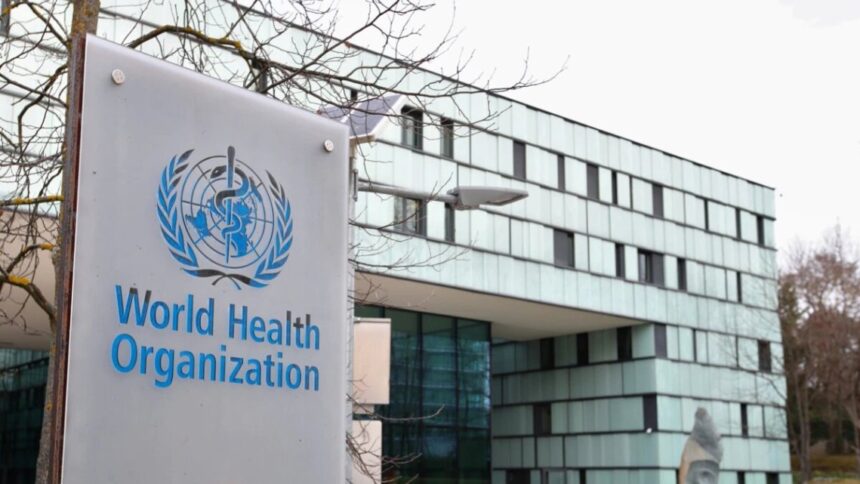
The World Health Organization has called for stronger international cooperation and sustained investment in science to address emerging health threats, as countries commemorate World Health Day 2026.Observed annually on April 7 to mark the founding of the WHO in 1948, this year’s theme is “Together for health. Stand with science.” In a statement, the organisation highlighted that human health has improved significantly over the past century, largely due to scientific advancements and global collaboration.
The WHO noted that maternal deaths worldwide have dropped by more than 40 per cent since 2000, while mortality among children under five has declined by over half. It added that progress in medicine, technology, and research has turned conditions such as high blood pressure, cancer, and HIV into more manageable illnesses. WHO Director-General Tedros Adhanom Ghebreyesus described science as one of humanity’s most powerful tools for safeguarding health, noting that people today generally live longer and healthier lives than previous generations. He pointed to breakthroughs such as vaccines, penicillin, germ theory, MRI technology, and the mapping of the human genome as major life-saving achievements.
Despite this progress, the organisation warned that health risks are rising due to climate change, environmental damage, geopolitical instability, and population shifts. It stressed that widespread adoption of scientific innovations has significantly improved healthcare delivery and outcomes worldwide. The WHO explained that modern medical advancements have transformed procedures such as surgery, which once involved extreme pain before the introduction of anaesthesia, into safer and more accessible treatments, even in low-resource settings.
It also highlighted that global immunisation campaigns over the past five decades have saved more than 154 million children, with vaccines playing a major role in reducing infant mortality. The measles vaccine alone has accounted for over 90 million lives saved. Additionally, improvements in early detection tools, including digital blood pressure monitors and mammography for breast cancer, have become critical in preventing and managing diseases.
Reflecting on its 78-year history, the WHO emphasised its role in advancing global health science and coordination. It cited its response to the Severe Acute Respiratory Syndrome in 2003, when it led a global laboratory effort that identified the virus within two weeks, setting a benchmark for future responses. The organisation also referenced its introduction of alcohol-based hand rub formulations in 2009, widely adopted in healthcare systems, including during the COVID-19 pandemic. It added that it continues to establish global standards such as air quality guidelines and water safety measures to reduce disease risks.
As part of this year’s campaign, the WHO said it will host major international events, including a One Health Summit in Lyon, France, organised alongside the G7 Presidency, bringing together global leaders, scientists, and community stakeholders.It will also convene a global forum of its collaborating centres, involving more than 800 academic and research institutions across over 80 countries. WHO Chief Scientist Sylvie Briand noted that science helps turn uncertainty into understanding and provides pathways to protect communities. She warned that without strong scientific evidence, decisions could be influenced by bias or misinformation, leading to harmful outcomes.
In Nigeria, First Lady Oluremi Tinubu echoed the WHO’s message, emphasising the importance of innovation and collaboration in improving health outcomes. She highlighted the role of scientific partnerships in overcoming global health challenges and promoting healthier living. Mrs Tinubu also underscored the One Health approach, which recognises the link between human, animal, plant, and environmental health, and called for continued efforts to strengthen healthcare systems and support scientific progress.
She urged global stakeholders to remain committed to investing in science and building resilient health systems, stressing that collaboration remains key to tackling present and future health challenges. The WHO further called on governments, institutions, and individuals to prioritise evidence-based decision-making, noting that sustained cooperation is essential for building stronger and more equitable healthcare systems worldwide.
Source: https://www.premiumtimesng.com/