




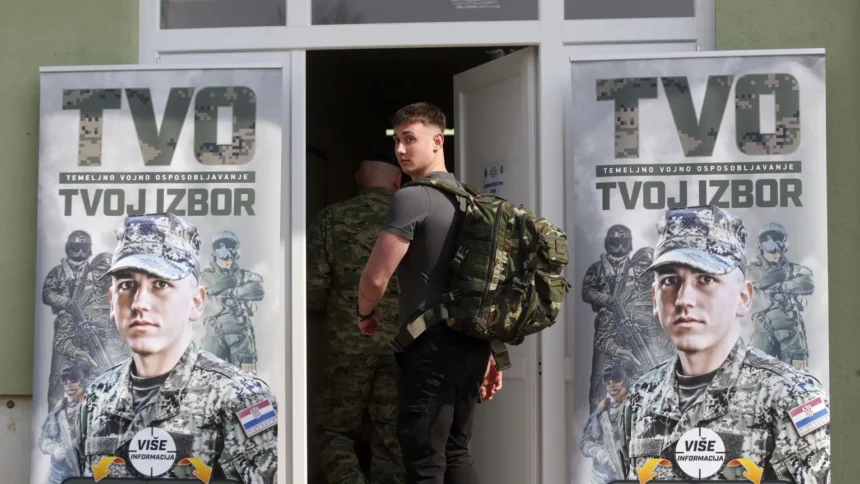
Hundreds of Croatian teenagers have begun reporting for compulsory military service, marking the first time the requirement has been enforced since it was abolished in 2008. The training programme will be held at military barracks in three different locations across Croatia. Recruits are expected to report to the facility closest to their homes.
Upon arrival, they will be issued their military kits and assigned dormitories. For the next two months, they will undergo structured military discipline as part of their training. Chief of the General Staff, Tihomir Kundid, noted that the recruits have now been removed from their civilian environment. However, he reassured concerned parents that the transition would be carefully managed to avoid placing too much pressure on the young trainees.
According to him, the recruits will be gradually introduced to military life to ensure they adjust without experiencing excessive stress. Many of the conscripts may also find relief in knowing that mobile phones are largely permitted, although their use will be prohibited during training sessions. About 800 individuals make up the first group of conscripts. Interestingly, more than half volunteered before receiving official call-up notices. Women, who are not required to serve, account for about 10% of the recruits.
Authorities also highlighted that only 10 people have so far registered as conscientious objectors. Those individuals will instead complete four months of civilian service and will receive less than half of the €1,100 monthly allowance given to military recruits. General Kundid described the training programme as dynamic and engaging. It will include traditional military skills as well as modern elements such as basic drone operation, drone defence techniques, and cyberwarfare countermeasures.
Croatia’s decision to restore conscription was largely influenced by the ongoing war in Ukraine, which has brought conflict closer to the region. Only Hungary separates Croatia from Ukraine. Defence Minister Ivan Anusic said the security situation has changed significantly in recent years. While the region once felt stable, he said the current environment is far more uncertain due to Russia’s war in Ukraine and its influence across Europe.
Croatia’s move could influence neighbouring countries. Slovenia’s largest opposition party has been advocating the return of conscription ahead of upcoming parliamentary elections. Serbia’s president, Aleksandar Vucic, has also announced plans to reintroduce military service within the next year, alongside a major increase in defence spending.
These developments have raised concerns in Kosovo and Bosnia. At the same time, Serbia has expressed alarm about Croatia’s growing military cooperation with Kosovo and Albania. Balkans analyst James Ker-Lindsay warned that military build-ups in the region could heighten tensions, as each country may interpret the actions of others as potential threats. Despite these concerns, Croatia’s conscription programme is already underway. Authorities plan three additional training intakes before the end of the year, aiming to train about 4,000 recruits annually. Croatia is now among ten NATO countries that have reintroduced mandatory military service, joining nations such as Greece, Turkey, and several Scandinavian and Baltic states.
Source: https://www.bbc.com/