




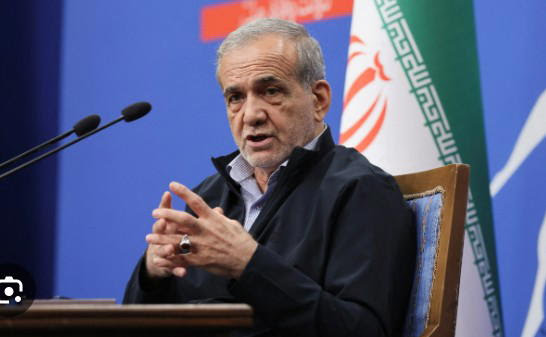
Iran’s response to a United States proposal aimed at ending ongoing hostilities has been delivered through Pakistan, which is acting as a mediator, according to Iran’s state news agency, IRNA. The report on Sunday stated that under the proposed framework, the first phase of talks would concentrate on halting hostilities and strengthening maritime security in the Gulf and the Strait of Hormuz. An Iranian official, speaking to Al Jazeera, said the response also prioritises ending conflicts across the region, particularly in Lebanon, while addressing wider disputes with Washington.
The official added that Tehran’s submission includes discussions on the Strait of Hormuz, Iran’s nuclear programme, and the lifting of international sanctions, describing the response as “realistic and positive.” The source further stated that a constructive reply from Washington could accelerate negotiations, stressing that the next move now rests with the United States. However, US President Donald Trump reacted sharply to the development, accusing Iran of delaying tactics. In a post on Truth Social, he claimed Iran had “been playing games with the United States, and the rest of the World, for 47 years,” adding that “they will be laughing no longer.”
In a subsequent post, Trump described Iran’s reply as unacceptable, stating that he did not approve of the response from what he called Iran’s “so-called representatives.” Reports also indicated that the US proposal included phased measures in which Iran would scale back uranium enrichment while Washington would gradually ease sanctions, unfreeze Iranian assets worth billions of dollars, and lift its naval restrictions on Iranian ports. The diplomatic exchanges come ahead of Trump’s planned visit to China, a major importer of Iranian oil with strategic interests in the region.
Tensions have remained high following recent exchanges between US and Iranian forces around the Strait of Hormuz, although both sides have not officially declared an end to the ceasefire in place since April 8. US officials have maintained that Iran is facing mounting financial pressure due to naval restrictions imposed on its oil exports, while Iranian authorities argue the country remains capable of withstanding the economic strain. Iran’s parliamentary speaker and chief negotiator, Mohammad Bagher Ghalibaf, has insisted that any lasting ceasefire would depend on the removal of the US blockade.
In response to escalating tensions, Iran reportedly restricted foreign shipping in the Strait of Hormuz and seized several foreign-flagged vessels, though previously it had allowed passage for selected allied ships. According to Al Jazeera’s Kamal Hyder reporting from Islamabad, Pakistan has intensified diplomatic efforts to encourage compromise between both sides, alongside engagement from countries such as Qatar, Saudi Arabia, Türkiye, and China. Hyder noted that the economic impact of disruptions in the Strait of Hormuz is already being felt globally, including in Pakistan, where fuel prices have surged.
Analysts cited in the report say Pakistan’s diplomatic position, coupled with its relations with both Iran and the United States, could make it a key player in achieving a breakthrough in the negotiations. A senior Middle East researcher, Abbas Aslani, explained that Iran’s response should not be viewed as a direct acceptance or rejection, but rather as a clarification of its position on the US proposal. He added that progress could be possible if both sides agree to initial trust-building steps, but warned that further US demands, such as halting uranium enrichment or transferring enriched materials abroad, could stall or derail the process entirely.