




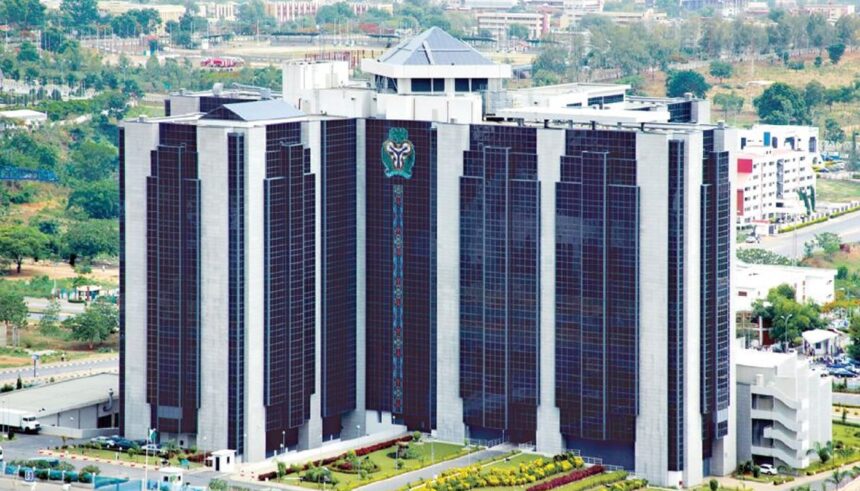
The Central Bank of Nigeria has been recognised as Central Bank of the Year 2026 by the Central Banking Awards Committee in London, with organisers describing the honour as evidence of a rapid and significant shift in Nigeria’s economic management. The announcement was made at the 13th annual Central Banking Awards while President Bola Ahmed Tinubu was on an official visit to the United Kingdom, drawing international focus to Nigeria’s reform programme and the central bank’s role in economic stabilisation.
According to the committee, the decision reflected both the severe challenges inherited by the bank and the policy changes introduced from 2023 onward. They noted that Nigeria had been facing a serious economic downturn before the reforms. The nation fell from Africa’s largest economy in 2014 to fourth place, behind South Africa, Egypt and Algeria. Inflation surged from roughly 15.4 per cent in November 2021 to above 22 per cent, while foreign reserves declined despite tight currency restrictions.
Economic strain was worsened by an estimated $7 billion in unmet foreign exchange commitments and a wide gap — about 60 per cent — between official and parallel market exchange rates. Extensive subsidies and direct monetary financing also intensified pressures, limiting the effectiveness of monetary policy. A former senior CBN official cited by the committee said the situation had sparked concerns that Nigeria risked an economic collapse similar to crises experienced in Venezuela and Zimbabwe without urgent intervention.
When Tinubu assumed office in May 2023, the committee said he inherited an economy nearing what they termed hyperinflation and fiscal insolvency. The naira was rapidly depreciating and inflation kept rising. His administration responded by scrapping fuel subsidies and liberalising the foreign exchange system. The immediate consequences of these policies were tough for citizens, as living costs climbed sharply and inflation peaked at 34.80 per cent in December 2024 — the highest rate in almost 30 years.
Despite the difficulties, the committee stated that the CBN, led by Governor Olayemi Cardoso, rolled out measures focused on restoring stability, rebuilding trust and reinforcing the financial system. These efforts centred on tighter monetary discipline, institutional reforms and greater openness.Cardoso discontinued quasi-fiscal practices where the central bank directly financed sectors of the economy — a trend that had fueled inflation. Internal restructuring followed, including workforce reductions, disciplinary actions and redeployment of staff to priority areas.
A senior bank official said transparency and strong governance became core priorities. The CBN enhanced policy communication, reinforced accountability systems and adopted data-driven tools for economic decision-making. Major changes were also introduced in the foreign exchange market. The bank replaced multiple exchange windows with a willing-buyer, willing-seller framework and launched an electronic FX matching platform to improve pricing clarity and transparency.
Cardoso reported that these steps narrowed the gap between official and parallel exchange rates to under two per cent, down from more than 60 per cent. He added that clearing outstanding FX obligations helped rebuild investor and business confidence. Nigeria’s external reserves strengthened as well, reaching about $46.7 billion by November 2025 — the highest level in nearly seven years. The International Monetary Fund praised the reforms, saying FX market changes improved liquidity and price discovery.
To deepen financial market stability, the CBN partnered with the Securities and Exchange Commission and the National Pension Commission to enhance transparency in the fixed-income market and encourage long-term investments.To curb inflation, the central bank raised interest rates from 18.75 per cent in 2023 to 27.5 per cent by late 2024. The tightening began to show results, with inflation easing to about 15.10 per cent by January 2026. As price pressures slowed, the bank made modest rate cuts.
Cardoso said reducing inflation further remains a priority, stressing that current levels are still high. He noted that the bank is working toward an inflation-targeting system with support from the International Monetary Fund and the Bank of England.Within the banking industry, new capital requirements introduced in 2024 aimed to make banks more resilient to economic shocks. Over 30 banks have since raised fresh capital, with many meeting the targets ahead of the March 2026 deadline.
Supervisory oversight has also been strengthened, particularly in rapidly expanding areas like fintech and digital finance, while credit support for small businesses has continued. Bank data indicates that digital lending reached more than 1.2 million small enterprises in 2025. Additionally, the CBN reviewed national cash management processes, set new ATM operating guidelines and enhanced oversight of payment agents nationwide. Investment in digital payments has expanded, with more than 12 million contactless cards now in circulation.
Regulatory improvements also played a role in Nigeria’s removal from the Financial Action Task Force grey list in 2025 — a move viewed as key to strengthening the country’s global financial standing.International credit assessors acknowledged the progress. Fitch Ratings upgraded Nigeria’s rating in April 2025, while Moody’s also raised its outlook, pointing to stronger fundamentals and sustained reforms. Even with these improvements, the awards committee noted that challenges persist. Inflation remains above ideal levels, banking reforms are still in progress and stronger legal safeguards are needed to ensure greater central bank independence.
Nevertheless, the committee said the achievements so far are exceptional. A former senior CBN official remarked that the bank’s progress has been “nothing short of remarkable,” reflecting the basis for its global recognition as Central Bank of the Year 2026.