




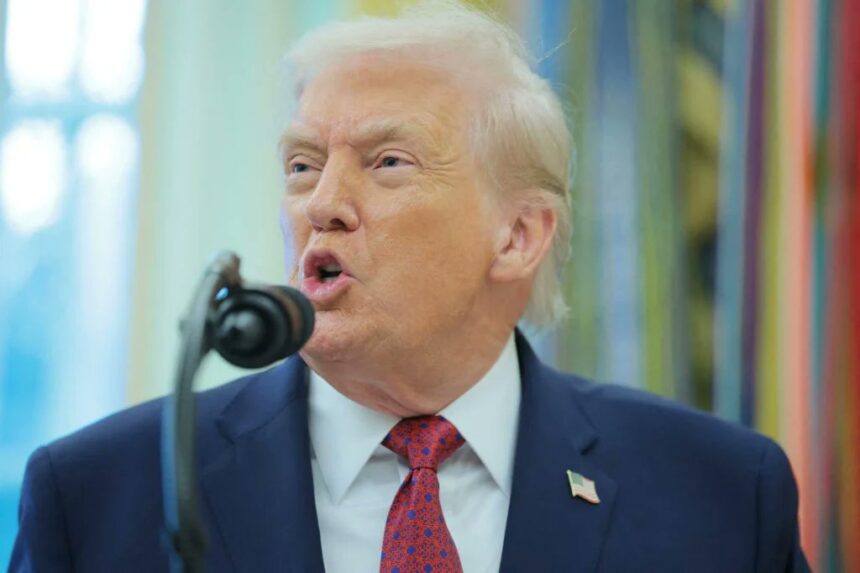
The Trump administration has announced an expansion of its travel ban, adding five more countries to the list and imposing new restrictions on others. The move, announced Tuesday, is part of ongoing efforts to tighten US entry requirements for travel and immigration. It comes in the wake of the arrest of an Afghan national suspected of shooting two National Guard troops over the Thanksgiving weekend.In June, President Donald Trump had introduced a ban on citizens from 12 countries and placed additional restrictions on travelers from seven others, reviving a signature policy from his first term.
At that time, the ban applied to Afghanistan, Myanmar, Chad, the Republic of Congo, Equatorial Guinea, Eritrea, Haiti, Iran, Libya, Somalia, Sudan, and Yemen, while heightened restrictions were placed on visitors from Burundi, Cuba, Laos, Sierra Leone, Togo, Turkmenistan, and Venezuela.
On Tuesday, the administration expanded the list of countries whose citizens are fully banned from entering the US to include Burkina Faso, Mali, Niger, South Sudan, and Syria. Travel was also fully restricted for holders of Palestinian Authority-issued travel documents. In addition, 15 countries have been added to the list of those facing partial restrictions: Angola, Antigua and Barbuda, Benin, Côte d’Ivoire, Dominica, Gabon, Gambia, Malawi, Mauritania, Nigeria, Senegal, Tanzania, Tonga, Zambia, and Zimbabwe.
The administration cited issues such as widespread corruption, fraudulent or unreliable civil documents, and criminal records that make it difficult to vet citizens from these countries. It also pointed to high rates of visa overstays, refusal by some countries to repatriate their nationals, and general instability and weak government control, which complicate the vetting process.
“The restrictions and limitations imposed by the Proclamation are necessary to prevent the entry of foreign nationals about whom the United States lacks sufficient information to assess the risks they pose, garner cooperation from foreign governments, enforce our immigration laws, and advance other important foreign policy, national security, and counterterrorism objectives,” the White House stated. The Afghan man accused of the attack near the White House has pleaded not guilty to charges of murder and assault.
Source: https://www.arabnews.com/