




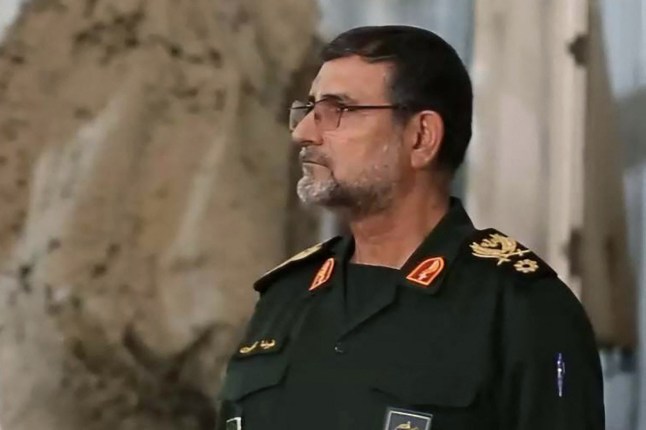
A senior naval commander linked to the closure of the Strait of Hormuz has reportedly been killed in a missile strike, as tensions between Israel and Iran continue to escalate. The Israel Defense Forces had earlier vowed to target Iranian leadership, warning that key figures would be pursued individually. Reports claim that Alireza Tangsiri, head of the Islamic Revolutionary Guard Corps Navy, was killed during a wave of missile strikes on March 25. However, Iranian authorities have not officially confirmed his death. Israeli Prime Minister Benjamin Netanyahu described him as a figure heavily involved in past violent activities.
Unverified footage circulating online appears to show a collapsed building in Bandar Abbas, where Tangsiri was reportedly meeting other officials at the time of the strike. The development comes amid ongoing diplomatic efforts, with the United States reportedly being urged not to target certain Iranian leaders in order to preserve chances for dialogue.
Tangsiri had been associated with operations that disrupted maritime traffic through the Strait of Hormuz, a key global oil route. His recent statements included updates on restricted ship movements and warnings directed at oil facilities linked to the U.S. According to Netanyahu, the operation successfully eliminated the IRGC Navy commander, describing him as central to efforts to shut down the vital waterway.
Israeli Defence Minister Israel Katz said the strike in Bandar Abbas also killed several senior naval officers, calling it a targeted operation against those responsible for maritime attacks and blockades. He added that the move was intended as a warning, stressing that Israeli forces would continue pursuing their objectives. Israeli officials also claimed that the IRGC Navy’s intelligence chief, Behnam Rezaei, was among those killed.
The IDF accused Tangsiri of orchestrating attacks on oil tankers and commercial vessels over the years, as well as playing a leading role in disrupting global trade through the Strait of Hormuz. Amid the conflict, Israel reportedly removed Abbas Araghchi and Mohammad Bagher Qalibaf from its target list following diplomatic interventions aimed at keeping negotiation channels open.
Sources indicated that concerns were raised that eliminating key officials could derail ongoing peace efforts, prompting the U.S. to advise restraint. On March 25, Iran rejected a U.S.-backed proposal to end the conflict, instead outlining its own conditions for peace. Araghchi stated that Iran would continue its resistance and was not currently engaging in negotiations, maintaining that the country’s stance remains firm.
He also called for a permanent end to the war and compensation for damages, reporting that over 2,000 people have died in the conflict, including Supreme Leader Ali Khamenei.Araghchi further criticized the United States, arguing that it has been unable to fully protect allied Gulf states despite maintaining a military presence in the region.