




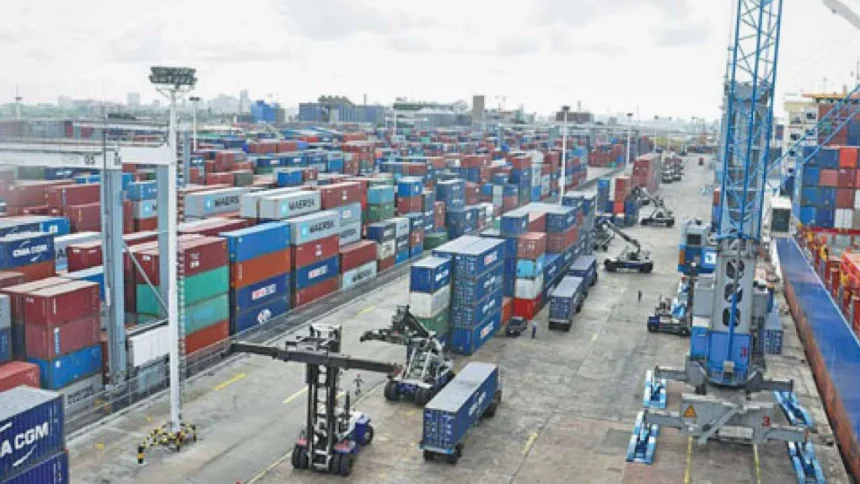
Nigeria’s Tin Can Island Port and Lagos Port in Apapa have been recognised among the world’s most improved container ports over the past five years, according to the 2025 Container Port Performance Index (CPPI). The report, jointly compiled by the World Bank and S&P Global Market Intelligence, assesses container ports worldwide based on operational efficiency, vessel turnaround times and overall performance within global shipping networks.
According to the latest rankings, Tin Can Island Port placed 10th among the top-performing ports that recorded the greatest improvements between 2020 and 2025, while Lagos Port ranked 12th globally. Data from the report showed that Tin Can Island Port improved its CPPI score by 42 points, moving from -68 in 2020 to -26 in 2025. Lagos Port also posted significant gains, improving by 35 points from -61 to -26 during the same period.
The achievement places Nigeria among a select group of countries that have made notable progress in enhancing port operations, cargo handling efficiency and vessel turnaround times. Nigeria’s ports outperformed several major international facilities in the improvement rankings, including ports in France, Türkiye, India, Peru, China, the United States, Brazil and Egypt.
South Africa’s Port Elizabeth topped the list of the world’s most improved container ports with an 80-point increase, followed by Bahrain’s Khalifa Bin Salman Port with 75 points and Ecuador’s Posorja Port with a 70-point gain. The report highlighted the growing importance of efficient ports in maintaining resilient global supply chains, particularly amid disruptions caused by geopolitical tensions, climate-related events and the lingering effects of pandemic-era volatility.
According to the CPPI, the amount of time vessels spend in port has become a critical measure of supply chain efficiency. Ports that minimise delays and improve operational performance help reduce congestion, strengthen shipping networks and enhance international trade competitiveness. The report further noted that prolonged turnaround times can reduce available shipping capacity and contribute to wider supply chain disruptions, making port efficiency a key factor in global logistics performance.
In the foreword to the report, World Bank Group Director for Transport and Logistics Bertrand De la Borde and S&P Global’s Vice-President and Head of Maritime & Journal of Commerce, Guy Sear, explained that the index measures real-world port performance using actual vessel call data. They noted that the methodology captures factors such as berth availability, cargo handling productivity, yard operations and coordination among stakeholders, providing a reliable benchmark for comparing ports worldwide. The strong performance of Tin Can Island and Lagos ports reflects ongoing improvements in Nigeria’s maritime sector and highlights the country’s growing role in regional and global trade networks.
Source: https://guardian.ng/