



The Nigerian government is set to sign a $25 billion intergovernmental agreement with Morocco for the development of a major gas pipeline project before the end of the year.Amina Benkhadra, head of Morocco’s hydrocarbons and mining agency, ONHYM, disclosed that the proposed African Atlantic Gas Pipeline will span approximately 6,900 kilometres, combining both offshore and onshore routes.
The pipeline is expected to transport up to 30 billion cubic metres of gas, with about half allocated to Morocco and exports to Europe, strengthening energy supply across regions. Beyond energy delivery, the project is projected to enhance economic integration across West Africa by boosting electricity generation and supporting industrial and mining growth. It is also expected to position Morocco as a strategic energy bridge between Africa and Europe.
Following the signing of the agreement, a high-level governing body will be established in Nigeria, comprising ministers from all 13 participating countries to oversee policy coordination and regulatory frameworks. In addition, a joint venture company will be created in Morocco by ONHYM and the Nigerian National Petroleum Company to manage the project’s execution, financing, and construction.
Benkhadra noted that the project has attracted considerable interest due to its scale, phased approach, and strategic value. She explained that the first phase will connect Morocco to gas reserves in Mauritania and Senegal, while also linking Ghana to Côte d’Ivoire, before eventually extending to Nigeria’s gas fields.
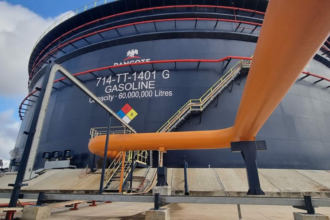
This initial phase is expected to be completed by 2031, with each segment designed to function independently to allow for gradual progress and early economic benefits. The Economic Community of West African States has also expressed support for the project, reinforcing its regional significance. Although the Nigerian government has yet to release official details regarding the agreement signing, the project underscores strengthening ties between Nigeria and Morocco, particularly in sectors such as energy and fertiliser production. Nigeria remains Africa’s most populous nation and its largest oil producer, and is also home to the continent’s biggest refinery, the Dangote refinery, owned by businessman Aliko Dangote.
Source: https://www.premiumtimesng.com/