




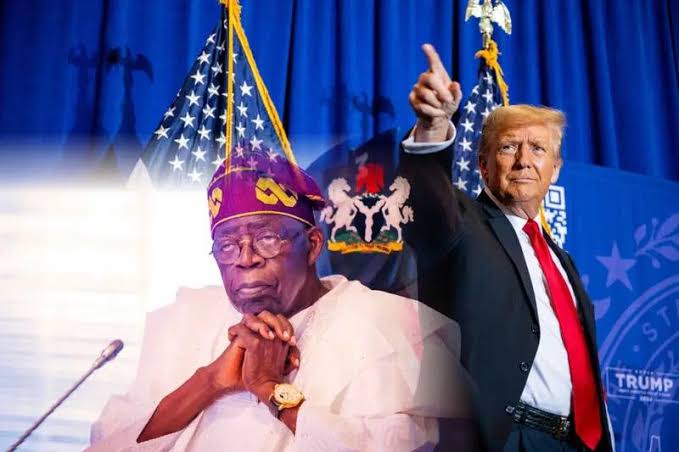
The United States government has suspended the processing of permanent residency (Green Card) and citizenship applications for individuals already living within the country. Unlike earlier measures that focused mainly on restricting entry at the border, the new action affects legal immigrants who are already settled in the U.S. and seeking to regularise their status. The move impacts Nigeria and several other countries recently included in the Trump administration’s expanded travel ban.
The decision, authorised by Secretary of State Marco Rubio, marks a further tightening of U.S. immigration policy and follows a major domestic security incident involving a beneficiary of the programme. A State Department spokesperson confirmed the change, quoting Rubio as saying that the issuance of diversity visas has been “indefinitely paused until we can be certain about who is being admitted into the country.”
The suspension followed the identification of Claudio Neves Valente as the main suspect in a recent shooting at Brown University. Valente, a 48-year-old Portuguese national and former student of the university, was also accused of killing a Massachusetts Institute of Technology professor earlier in the week. After a multi-state manhunt, he was found dead on Thursday night. Earlier this month, the White House directed U.S. Citizenship and Immigration Services to halt all immigration petitions from nationals of 19 countries that were placed under restrictions in June. That directive has since been expanded to cover 20 additional countries under a proclamation issued on Tuesday.
Under the updated policy, five countries—Burkina Faso, Mali, Niger, South Sudan, and Syria—are subject to complete entry bans. Another 15 countries, including Nigeria, Angola, Senegal, and Malawi, face partial restrictions that have nonetheless resulted in a full suspension of internal immigration processing. The administration’s tougher approach follows the killing of two National Guard soldiers in Washington, D.C., during Thanksgiving week. Authorities have alleged the attack was carried out by an Afghan national, a claim the White House has cited in support of stricter vetting measures.
The Diversity Visa Programme, commonly referred to as the Green Card Lottery, allocates up to 55,000 visas each year through a random selection process. Applicants must meet minimum education or work requirements and pass security screening. The programme has long drawn criticism from President Trump. During his first term, he called for its elimination after a 2017 terrorist attack in New York was linked to a beneficiary. Trump has repeatedly pushed for a shift to a merit-based immigration system that prioritises highly skilled, English-speaking applicants rather than lottery selection.
The suspension is expected to significantly affect applicants from Africa, Asia, and Europe, which account for most beneficiaries of the programme. In the 2026 fiscal year, African nationals made up the largest share of participants. Immigration lawyers note that the pause affects not only applicants abroad but also those legally residing in the U.S. who were in the process of adjusting their status. Immigration solicitor Jeremy McKinney explained that diversity visa winners already in the U.S. must apply through USCIS to become permanent residents, while the State Department oversees both the lottery and visa issuance.
The latest action is widely viewed as a further escalation of the administration’s broader immigration clampdown, as domestic security concerns continue to be used to justify sweeping changes to U.S. immigration policy.
Source: https://businessday.ng/