




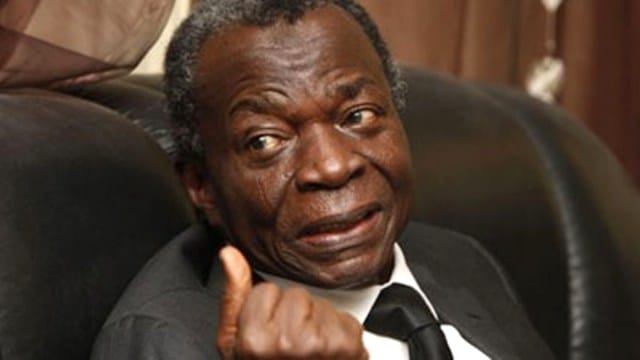
Former President of Nigeria’s Court of Appeal, Isa Ayo Salami, has stated that Peter Obi should not have been cleared to run in the 2023 presidential election under the Labour Party. The retired justice based his view on what he described as clear constitutional constraints, arguing that the process that produced Obi as the party’s candidate was fundamentally defective. He made the remarks in Ilorin while receiving an award from the Wole Soyinka Centre for Investigative Journalism. The honour was presented by the centre’s founder Dapo Olorunyomi and its executive director Motunrayo Alaka at his residence.
Critiquing the judiciary, Salami connected controversial political verdicts to competency gaps among some members of the bench, saying such weaknesses have led to questionable decisions across various court levels. He argued that by the time Obi left the Peoples Democratic Party primary election, the Labour Party had already submitted its membership register to the Independent National Electoral Commission.He maintained that Nigeria’s constitution does not permit independent candidacy and questioned how Obi obtained the party’s ticket without prior membership status.
Salami broadened his criticism to other judicial outcomes, pointing to inconsistencies even at the highest court. He cited the case involving Abba Kabir Yusuf, Governor of Kano State, saying disputes over party membership records were ignored despite objections raised in lower courts. He stressed that the membership register should serve as the primary proof above issued cards and faulted the handling of such basics.
The former appellate court head attributed these decisions not mainly to corruption but to what he called intellectual and experiential shortcomings within parts of the judiciary. He said some judicial officers lack the academic and professional grounding required for the role and warned that appointment standards appear to be weakening.
According to him, the rapid expansion of legal education and the increase in law faculties have placed pressure on maintaining quality within the system. He added that certain judgments, including some from the Supreme Court of Nigeria, can be surprising. Salami also criticised the promotion system within the judiciary, arguing that vacancy limitations and zoning arrangements sometimes take precedence over merit, allowing less seasoned judges to advance ahead of more experienced colleagues. He shared a personal example, noting that some of his juniors at the Court of Appeal were elevated to the Supreme Court before him because there was no available slot in his geopolitical zone.
Describing the situation as unfortunate, he expressed optimism that reforms could help rebuild confidence and integrity within the justice system.Salami thanked the organisers for the recognition, saying honours for judicial service motivate both recipients and the wider legal profession. He also reflected on figures who influenced his career, citing Nobel laureate Wole Soyinka for his principled national stance and late nationalist leader Obafemi Awolowo as a key inspiration for studying law. He recalled being deeply influenced by Awolowo’s courtroom self-defence during his treason trial, which strengthened his resolve to pursue a legal career.
Source: https://dailytrust.com/